Subscribe to AI in Action, your guide to AI transformation >

Case Study: How Accenture Song Executes Enterprise AI Transformation
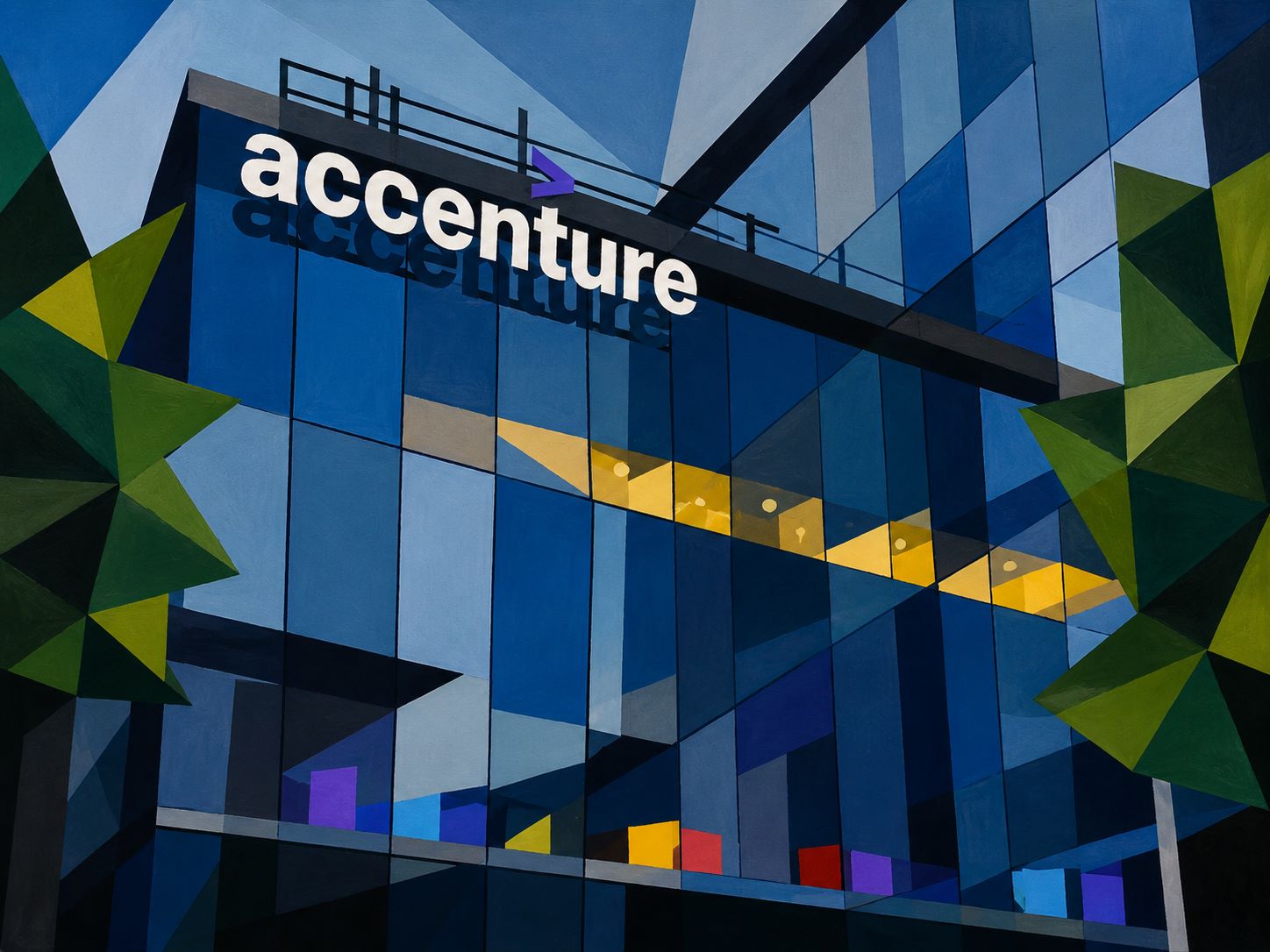
When Accenture Interactive rebranded to Accenture Song in 2022, the change represented far more than a new name. It signaled the transformation of a traditional digital marketing and experience agency into something fundamentally broader: an AI-enabled business reinvention platform.
Today, Song sits at the intersection of strategy consulting, customer experience, creative services, data engineering, cloud technology, and generative AI. Rather than approaching AI as a standalone technology initiative, Song embeds AI into the operating fabric of enterprise growth, customer engagement, and marketing transformation.
This case study explores how Accenture Song operationalizes AI transformation across large organizations and why its model has become one of the most influential in the consulting and marketing industry.
Reinvention Begins with Customer Value
Unlike organizations that start with infrastructure or experimentation, Song frames AI transformation around customer relevance, growth acceleration, and experience modernization. AI is treated not as an isolated technology layer, but as a mechanism to redesign how companies create value for customers. Its transformation programs typically focus on:
- improving personalization at scale
- accelerating content production
- modernizing commerce experiences
- increasing marketing effectiveness
- redesigning customer journeys end-to-end
This business-led philosophy can be seen in Song’s partnership with Adobe, where the companies co-developed generative AI marketing solutions using Adobe Firefly. The objective was not simply faster content creation, but enabling enterprises to industrialize personalized marketing while preserving brand governance and compliance.
Similarly, Song’s work with global staffing company Randstad demonstrated how AI transformation is tied to enterprise growth outcomes. Song helped redesign Randstad’s creative and content operations using generative AI-powered production models that improved localization speed and customer engagement globally.
In this model, AI becomes part of strategic business reinvention. Marketing, commerce, customer service, and operations are no longer treated as separate domains; they become interconnected systems driven by intelligence, automation, and real-time customer understanding.
Building an AI-Native Workforce
For Accenture Song, AI transformation depends as much on people and culture as it does on technology. Song has invested heavily in developing multidisciplinary teams that combine strategists, creatives, technologists, data scientists, prompt engineers, behavioral analysts, and experience designers.
This reflects a major shift in how modern agencies operate. In traditional agency structures, creative teams, technologists, and analysts often work independently. Song instead trains these groups to collaborate inside AI-enabled workflows.
At the center of this transformation is the idea of “human plus machine creativity.” Rather than replacing human creativity, generative AI becomes a collaborator that enhances ideation, accelerates production, and supports experimentation.
The organization has also expanded its capabilities aggressively through acquisitions. Recent acquisitions such as Work & Co strengthened Song’s digital product and experience engineering capabilities, while acquisitions like Unlimited added CRM and behavioral science expertise. Mindcurv expanded Song’s composable commerce and cloud-native engineering capabilities.
These acquisitions are strategically important because they allow Song to assemble end-to-end AI transformation capabilities rapidly, integrating creative storytelling with advanced engineering and customer intelligence. The result is a workforce model designed for continuous reinvention rather than static campaign delivery.
Breaking Down the Walls Between Creativity, Technology, and Operations
One of the most important aspects of Song’s transformation model is its operating structure. Traditional marketing agencies are usually organized around separate departments: creative, media, analytics, technology, production, and operations. Song intentionally dismantles those silos.
Its AI transformation programs are built around integrated cross-functional teams that combine business strategy, design, engineering, analytics, and AI operations into unified delivery groups. This enables organizations to move more quickly from experimentation to enterprise-scale execution.
A central component of this operating model is what Song calls the “content supply chain.” Historically, content production in large organizations has been slow, fragmented, and expensive. Campaigns often require dozens of teams, manual approvals, localization processes, and repetitive production work. Song uses generative AI to redesign this system entirely. AI-powered content supply chains allow organizations to:
- automate content generation
- assemble modular assets dynamically
- localize campaigns rapidly
- personalize experiences at scale
- deploy omnichannel campaigns far more efficiently
Instead of creating content manually for every market and channel, organizations can create intelligent content systems capable of adapting in real time. This operating model also combines global consistency with local adaptability. Enterprise AI platforms and governance standards are centralized, while regional teams adapt experiences to local markets and customer behaviors. The result is an organization that behaves less like a conventional agency and more like an always-on transformation ecosystem.
AI Becomes the Enterprise Operating Layer
For Song, AI is not a feature added onto marketing systems; it becomes the connective layer across customer engagement, commerce, operations, and analytics. Its technology ecosystem combines cloud infrastructure, enterprise AI platforms, composable architectures, marketing technology, customer data systems, and workflow automation.
Song works closely with major technology partners including Microsoft, Adobe, and NVIDIA to build enterprise-grade AI environments. Through partnerships with Microsoft and Avanade, Song integrates Copilot technologies into business workflows to support intelligent automation and employee augmentation. Its Adobe partnership embeds generative AI directly into marketing and creative operations. Meanwhile, Accenture’s collaboration with NVIDIA supports large-scale enterprise AI infrastructure and model deployment.
One of the most important technological shifts within Song’s model is the movement toward composable and modular architectures. Through acquisitions like Mindcurv, Song emphasizes API-first and cloud-native systems that allow organizations to rapidly integrate AI capabilities into commerce and customer experience platforms.
This modular architecture matters because AI transformation is evolving rapidly. Organizations require flexible ecosystems capable of integrating new models, copilots, and autonomous AI agents without rebuilding entire technology stacks.
Increasingly, Song’s direction points toward agentic AI systems capable of orchestrating workflows, optimizing campaigns, and automating operational decisions with minimal human intervention. In this sense, AI is becoming not just a productivity tool, but the operational backbone of enterprise experience management.
Data Becomes the Fuel for Intelligent Experiences
For Song, data is the core asset that enables personalization, prediction, and intelligent customer engagement. Its transformation programs focus heavily on unifying fragmented enterprise data sources across CRM systems, commerce platforms, behavioral analytics, campaign performance, and operational systems.
The goal is to create a continuously evolving intelligence layer that allows AI systems to understand customers in real time. This is particularly important because modern customer experiences depend on contextual relevance. AI-generated content alone has little value unless it is informed by customer behavior, preferences, transaction history, and engagement signals.
At the same time, enterprise clients remain deeply concerned about governance, privacy, compliance, and intellectual property risks associated with generative AI. Song addresses this challenge by emphasizing enterprise-safe AI environments, proprietary training datasets, governance controls, and responsible AI frameworks.
Its acquisition of Unlimited also strengthened its behavioral science and CRM intelligence capabilities, allowing organizations to combine AI-generated insights with human behavioral understanding. As a result, marketing evolves from static campaign execution into a living system that continuously learns, adapts, and optimizes itself.
Scaling AI Across the Enterprise
Song’s advantage lies in its ability to move organizations beyond isolated pilots into enterprise-wide operationalization. This begins with governance. AI systems are embedded with compliance controls, brand governance, legal review mechanisms, copyright safeguards, and responsible AI policies.
But governance alone is insufficient. Successful transformation also requires organizational adoption. Song therefore incorporates executive alignment workshops, employee retraining, operating model redesign, new performance metrics, and enterprise-wide change management programs.
Rather than deploying one-off AI solutions, Song typically builds reusable platforms and transformation capabilities that can scale across business units. This reflects Accenture’s broader philosophy that AI transformation is not a temporary initiative. It is an ongoing reinvention capability that continuously reshapes how organizations operate. In this model, companies do not “complete” AI transformation. They develop the organizational ability to evolve continuously alongside rapidly changing technologies.
The Rise of the AI-Powered Reinvention Agency
Accenture Song represents one of the clearest examples of how the consulting and agency industries are evolving in the age of generative AI. Its transformation model combines strategy consulting, creative services, AI engineering, cloud infrastructure, commerce modernization, customer experience, and operational change management into a single integrated system.
What differentiates Song is not merely access to generative AI tools. Many organizations now possess those technologies. Its advantage comes from orchestrating technology, talent, data, governance, and operating models together at enterprise scale.
In effect, Accenture Song is no longer operating as a traditional marketing agency. It is positioning itself as an AI-enabled enterprise reinvention partner — one designed to help organizations continuously redesign how they create value, engage customers, and compete in the digital economy.
Sources:
Accenture Acquires Unlimited to Further Bolster its CRM and Customer Relevance Capabilities
Accenture and Adobe to Co-Develop Industry-Specific Generative AI Solutions to Accelerate Marketing Transformation
Randstad Selects Accenture Song to Deliver Generative AI-Powered Creative and Content at Scale
Accenture, Microsoft and Avanade Help Enterprises Reinvent Business Functions and Industries with Generative AI and Copilot
Accenture and NVIDIA Lead Enterprises into Era of AI
Accenture to Acquire Work & Co to Strengthen its Global Digital Products and Experience Transformation Capabilities
Accenture to Acquire Mindcurv to Expand Composable Commerce Capabilities
Accenture dubs 800,000 staff ‘reinventors’ amid shift to AI
Subscribe to AI in Action by AIX — a weekly newsletter that explores what it really takes to put AI into production and make it work inside real organizations
Let’s talk
Whether you’re looking for expert guidance on AI transformation or want to share your AI knowledge with others, our network is the place for you. Let’s work together to build a brighter future powered by AI.